
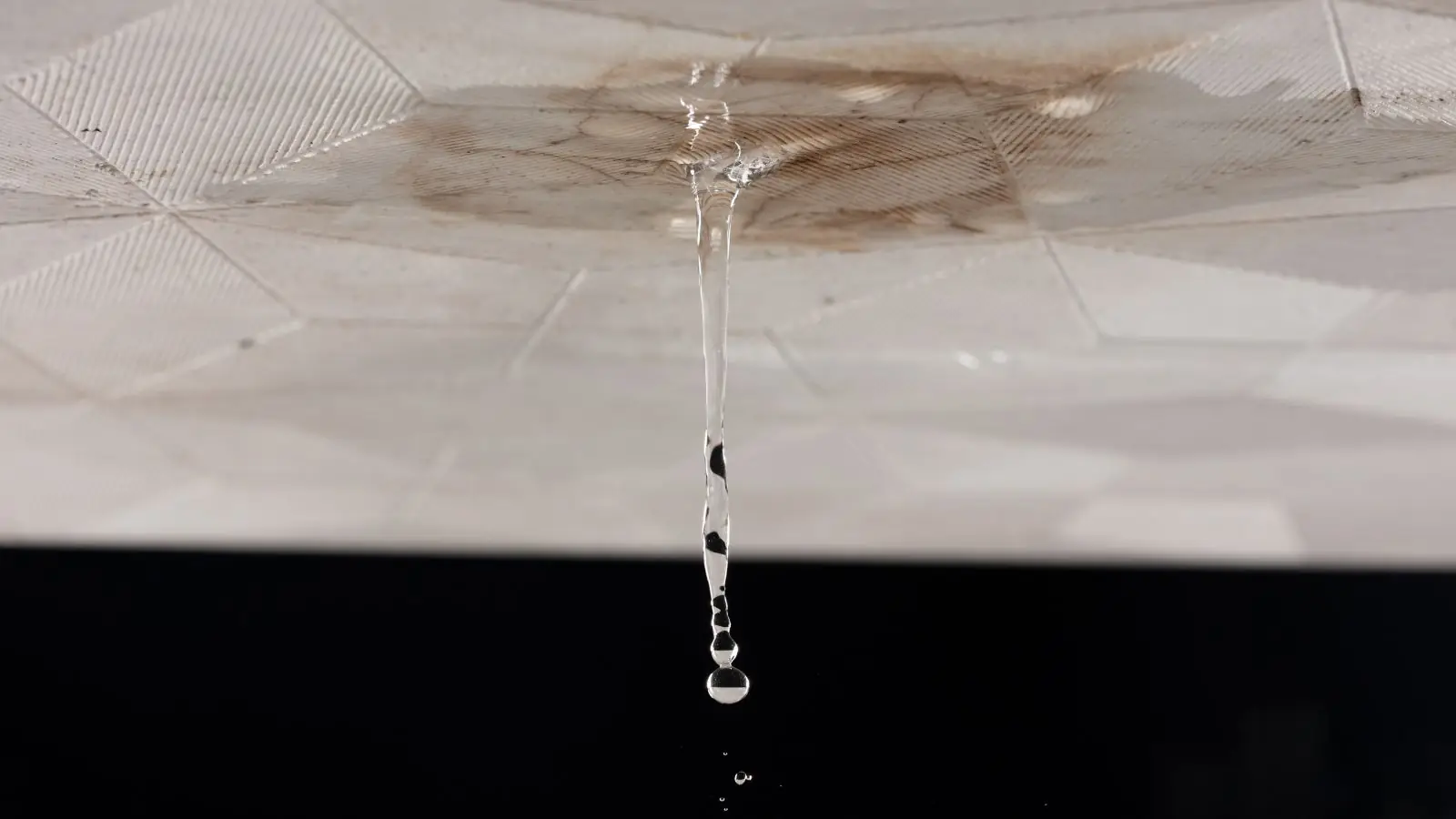
Roof leak water damage in West Hollywood, CA is what happens inside a building after rain gets past the roof. The water runs along framing, soaks insulation, stains ceilings and then drips into rooms below. This page covers the interior side: pulling out the water, drying the ceiling and attic, and removing what cannot be saved.
A roofer repairs or covers the roof. A restoration crew deals with the wet building. Both jobs matter, because drying a ceiling under an open roof only lasts until the next rain. The 24/7 line is open overnight, on weekends and during storms.
When rain is the reason, and when it is not
NOAA climate normals for the Westwood station put the rain season total at about 17.73 inches, with February the wettest month at 4.73 inches, then January at 4.14 and December at 2.93. Roof leaks bunch up in those months. June through September together add well under half an inch.
That pattern is a useful clue. A ceiling stain that grows in July is rarely the roof, because almost no rain falls. Look instead at a bathroom above, a water heater, an air conditioner or a supply line, and see the related pages on water heater leaks and AC leaks.
Why older roofs and flat roofs leak
West Hollywood's own hazard mitigation plan describes a housing stock of small houses and duplexes from the 1920s, plus a number of seven and eight story apartment buildings from the 1920s and 1930s. Many buildings predate 1993. Older roofs have more seams, patched flashing and aging sealants.
- Flat and low-slope roofs hold water and test every seam.
- Flashing at chimneys, vents and skylights can pull loose.
- Parapets and roof drains on apartment buildings clog with leaves and debris.
- Clay tile roofs can slip or crack and let wind-driven rain underneath.
- Stucco walls and window heads can leak when caulk dries out.
What you see inside, and what it means
Most callers describe a brown ring on a ceiling, a bubble in paint, a drip near a light fixture or a damp patch at the top of a wall. Each one tells us where the water traveled.
| What you see | What it usually means | First move |
|---|---|---|
| Brown ring on a ceiling | Water has soaked the board and insulation above | Call, and keep furniture out of the room |
| Bulging or sagging ceiling | Water is pooling behind the surface | Keep people clear and call right away |
| Drip at a light fixture | Water is following wiring in the cavity | Turn off the circuit from a dry spot and call |
| Damp top of a wall | Water is running down inside the wall | Call for moisture mapping |
| Wet attic insulation | The roof deck or flashing is open | Call a roofer and call us |
Surface stains understate the wet area. Moisture readings show how far the water went.
First hour safety steps
Stay out from under a bulging ceiling, since it can drop its load without warning. Move people, pets and valuables out of the room. Put buckets under steady drips and lift rugs off wet floors.
- Do not poke or cut a bulging ceiling unless a pro tells you to.
- Do not use a light fixture or fan that is dripping or wet.
- Switch off the circuit for the wet room from a dry spot, or leave if the panel is wet.
- Take photos of the ceiling, the drips and any damaged belongings.
- Renters should tell the property manager at once, and owners should call a roofer.
If you smell gas or see sparks, leave the building and call 911 and the utility before calling us.
Our process for interior roof leak damage
Find the water path
Moisture meters and a thermal camera show how far water traveled in the ceiling and walls.
Remove the water
Wet vacuums and portable extractors clear floors and carpet. Wet insulation and soft board come out.
Open and dry
Openings let air reach framing. Air movers and dehumidifiers dry the cavity.
Confirm dry
Readings are taken again until framing and board match a dry reference.
The drying approach follows ANSI/IICRC S500, the published industry standard for water damage restoration. After drying, water damage repair rebuilds the ceiling and paint. If water sat for days, ask us about mold remediation.
Storm water damage is part of this page
Storm damage is rarely only the roof. Wind-driven rain also comes through windows, doors, stucco cracks and failed drains. We treat all of it the same way: stop the entry, remove the water and dry what is wet.
If rain water came in at ground level, such as a flooded garage or a door threshold, the steps follow flood damage restoration and emergency water removal. Storm runoff can carry dirt, so protective gear and cleanup come first.
What affects the cost of roof leak cleanup
- How much of the ceiling, attic and wall cavity is wet.
- Whether insulation, ceiling board or flooring must be removed.
- How much equipment the drying needs and for how many days.
- Access to the attic or roof level and the height of the ceiling.
- How much rebuild follows after drying.
Insurance note
The California Department of Insurance claims guide says to make temporary repairs that protect the property, keep receipts and keep a log of calls with your insurer. Policies often treat a sudden storm opening differently from a long-term seep, and flood is usually a separate coverage. Read your policy and ask your insurer before discarding anything.
Mistakes to avoid and how to prevent repeats
- Drying the ceiling but leaving the roof open.
- Painting over a stain before moisture readings are normal.
- Leaving wet insulation in place because the surface looks dry.
- Waiting for the rain to stop before calling.
- Skipping roof and drain checks before the wet months, from December on.
Water coming through the roof?
Call the 24/7 line. We explain how to protect the room while a crew is dispatched.
We serve both cities on the same line. See the Beverly Hills page and the service area overview for ZIP codes and utilities.
Rain, hills and old buildings
The city's 2023 hazard mitigation plan describes slopes of about 6 percent in the northern third and about 2 percent across the southern two thirds. Roof water on a hillside lot can run toward a neighbor's wall or down a driveway, so a roof leak can leave water at ground level as well as in the attic.
Roof work and permits depend on the job. The City of West Hollywood Building and Safety Division is on the second floor of City Hall, and its permit guidance does not spell out roofing rules, so ask them before a larger roof repair.
Sources: City of West Hollywood Local Hazard Mitigation Plan (2023), City Building and Safety FAQ and NOAA 1991 to 2020 climate normals.
Roof leak water damage questions from West Hollywood
Is emergency roof leak water damage cleanup available in West Hollywood?
Yes. The 24/7 line takes calls overnight, on weekends and during storms, and a crew is dispatched when one is available. No arrival time is promised, and you are told how to protect the room while you wait.
Do you repair the roof?
No. A roofer repairs or covers the roof. We handle the water inside: extraction, ceiling and attic drying, insulation removal and cleanup, then rebuild through water damage repair.
Should I call you or my property manager first?
Renters should tell the property manager at once, since the building owner controls the roof. Call us as well if water is inside your unit, and keep photos of the damage.
Can a wet ceiling be saved?
Sometimes. A ceiling that was wet briefly and is dried fast may stay. Sagging, bulging or long-wet board and insulation are usually removed, and readings decide.
A stain appeared in summer. Is it the roof?
Probably not. Rain is rare from June through September, so look at plumbing, a water heater or an air conditioner above the stain.
Do you serve Beverly Hills too?
Yes. The same 24/7 line covers Beverly Hills ZIP codes 90210, 90211 and 90212.