
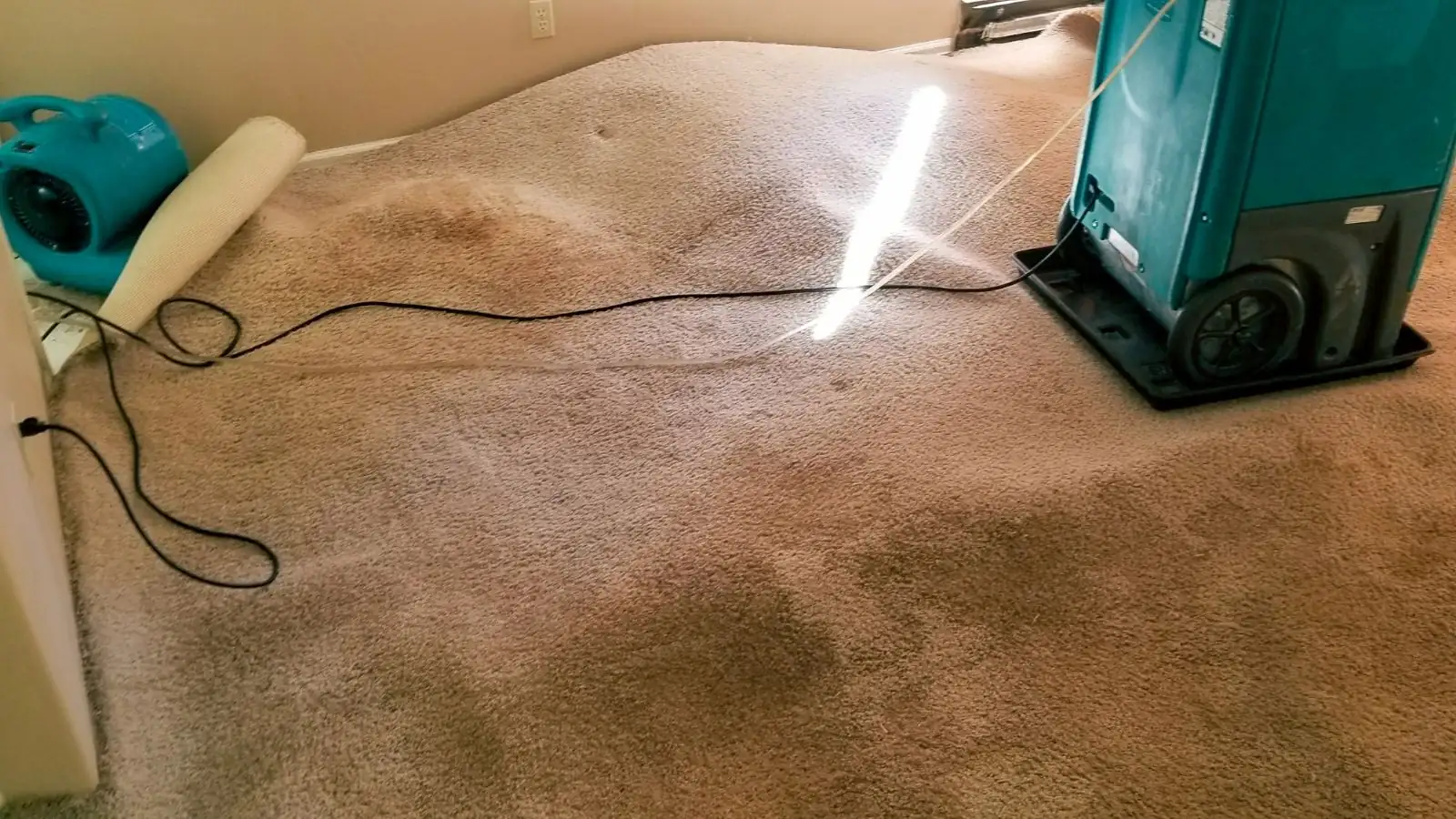
Carpet water damage restoration in West Hollywood, CA is the removal of water from carpet and pad, followed by drying of the carpet, the pad and the subfloor beneath. The aim is to save carpet that can be saved and to replace the pad or carpet that cannot. The 24/7 line takes calls at any hour, and a licensed and insured crew is dispatched when one is available.
Carpet looks fine long before it is dry. The surface fibers dry first, while the backing, the pad and the floor under it hold water for days. That hidden water is what leads to odor, buckling and mold.
How carpet gets wet in local apartments and houses
Census data from 2020 puts about four in five occupied homes in West Hollywood as renter-occupied, so most carpet problems start in an apartment, often from a neighbor's unit. A washer hose, a toilet supply line or a water heater above can soak the carpet in a bedroom or hallway below.
The city's 2023 Local Hazard Mitigation Plan notes that many buildings predate 1993. Older supply lines and drains fail more often, and older units often have carpet over wood subfloor, which absorbs water and dries slowly.
Rain adds to it. NOAA's 1991 to 2020 normals for the Westwood station show February averaging 4.73 inches, so winter roof leaks and window leaks reach bedroom carpet along outside walls.
What you notice and what it means
- Squishy steps in one room mean the pad is holding water.
- Ripples or buckling mean the backing is loosening from the water.
- A sour or musty smell after two days means the pad and subfloor are staying damp.
- A stain line on the wall above the baseboard means water wicked up from the floor.
- Dark or sticky patches near seams or tack strips mean water reached the edges and stayed.
First hour safety steps
- Stop the source with the fixture valve or the main shut-off, or call the property manager.
- Stay out of wet carpet near outlets, extension cords and the panel. Turn power off only from a dry spot.
- Lift furniture legs off the carpet and put foil or plastic under any that must stay.
- Do not use a household vacuum on wet carpet, because the electrical risk is real.
- Photograph the water line and the affected rooms, then call the 24/7 line.
Do not walk the wet carpet more than needed. Foot traffic pushes water deeper into the pad and spreads dirt into the fibers.
Dry in place or replace: how we decide
The U.S. Environmental Protection Agency advises drying water-damaged materials within 24 to 48 hours to prevent mold growth, and notes that porous materials may need to be thrown away. Carpet is porous, and the pad is the first thing to go in most losses.
Clean water from a supply line, caught early, usually lets the carpet dry in place after extraction. Gray or dirty water, loosened backing or days of exposure usually mean replacement. The ANSI/IICRC S500 standard is the reference we point to for these categories.
| Situation | Carpet | Pad |
|---|---|---|
| Clean supply water, caught early | Often dried in place | Often removed and replaced |
| Clean water, left for days | May be dried, but check backing and odor | Replaced |
| Gray water such as a washer overflow | Often replaced | Replaced |
| Sewage or flood water | Replaced | Replaced |
| Water only at one edge or doorway | Section may be floated and dried | Affected section replaced |
The final call depends on moisture readings and what the crew finds under the carpet.
Our process and the equipment used
A crew confirms the source is stopped, then measures moisture with a meter and a thermal camera to find the real wet area. Truck-mounted or portable extraction units pull water out of the carpet, and weighted tools press water out of the pad.
When the carpet is worth saving, the crew lifts a corner from the tack strip and floats it, which means holding it up on an air cushion so air can reach the pad and subfloor. Air movers push air under the carpet and a dehumidifier pulls moisture from the room. Antimicrobial treatment and deodorizing follow when the category calls for them.
Moisture readings are logged on each visit. The pad and subfloor decide when drying is finished, not the feel of the surface. See structural drying and dehumidification for how readings guide the job.
What affects the cost of carpet restoration
- The water category and how long the carpet stayed wet.
- How many rooms, closets and stairs are affected.
- Whether the pad and carpet can be saved or must be replaced.
- Subfloor condition, including wood that has swelled or stained.
- Drying equipment needed and the number of days it runs.
- Replacement carpet and pad if the carpet cannot be saved.
Insurance and renter note
Sudden and accidental water damage is often covered, while long-term seepage often is not, and flood is typically excluded without separate flood coverage, according to California Department of Insurance guidance. Renters should tell the landlord in writing and check renters insurance. Make temporary repairs, keep receipts and keep a log of calls with your insurer.
Carpet soaked right now?
Call the 24/7 line. We explain what to move and what to leave while a crew is dispatched.
Mistakes to avoid with wet carpet
- Waiting for it to dry on its own, which lets the pad sour.
- Using a fan on the surface only, since it leaves the pad and subfloor wet.
- Steam cleaning wet carpet before the water is extracted.
- Keeping old pad because the carpet looks fine.
- Ignoring a musty smell in the weeks after a leak.
Carpet, apartments and who to tell
With about 80 percent of homes occupied by renters at the 2020 Census, wet carpet is often a landlord and tenant matter. Tell the property manager in writing the same day, attach photos and ask who will approve the drying and any carpet replacement.
The City of West Hollywood Building and Safety FAQ exempts repairing leaks in water piping from a permit, but replacing piping needs one. If the leak came from piping that must be replaced, the plumber handles that step, and we handle the water side.
Sources: U.S. Census 2020, City of West Hollywood Building and Safety FAQ and EPA moisture guidance.
Carpet water damage questions from West Hollywood
Is emergency carpet water damage restoration available in West Hollywood?
Yes. The 24/7 line takes calls overnight, on weekends and on holidays, and a crew is dispatched when one is available. No arrival time is promised, and you are told what to do while you wait.
Can wet carpet be saved?
Often, if the water was clean and extraction and drying start quickly. Gray or dirty water, long exposure or loosened backing usually mean replacement.
Why is the pad usually replaced?
Pad acts like a sponge and dries slowly, and it can hold contaminants. It is inexpensive compared with the risk of odor and mold, so it is commonly replaced even when the carpet is saved.
How long does carpet take to dry?
Several days is common, depending on the water, the pad and the equipment. Moisture readings in the carpet, pad and subfloor decide when it is done.
Do you serve Beverly Hills too?
Yes. The Beverly Hills page lists the ZIP codes served, and the service area overview shows both cities.