
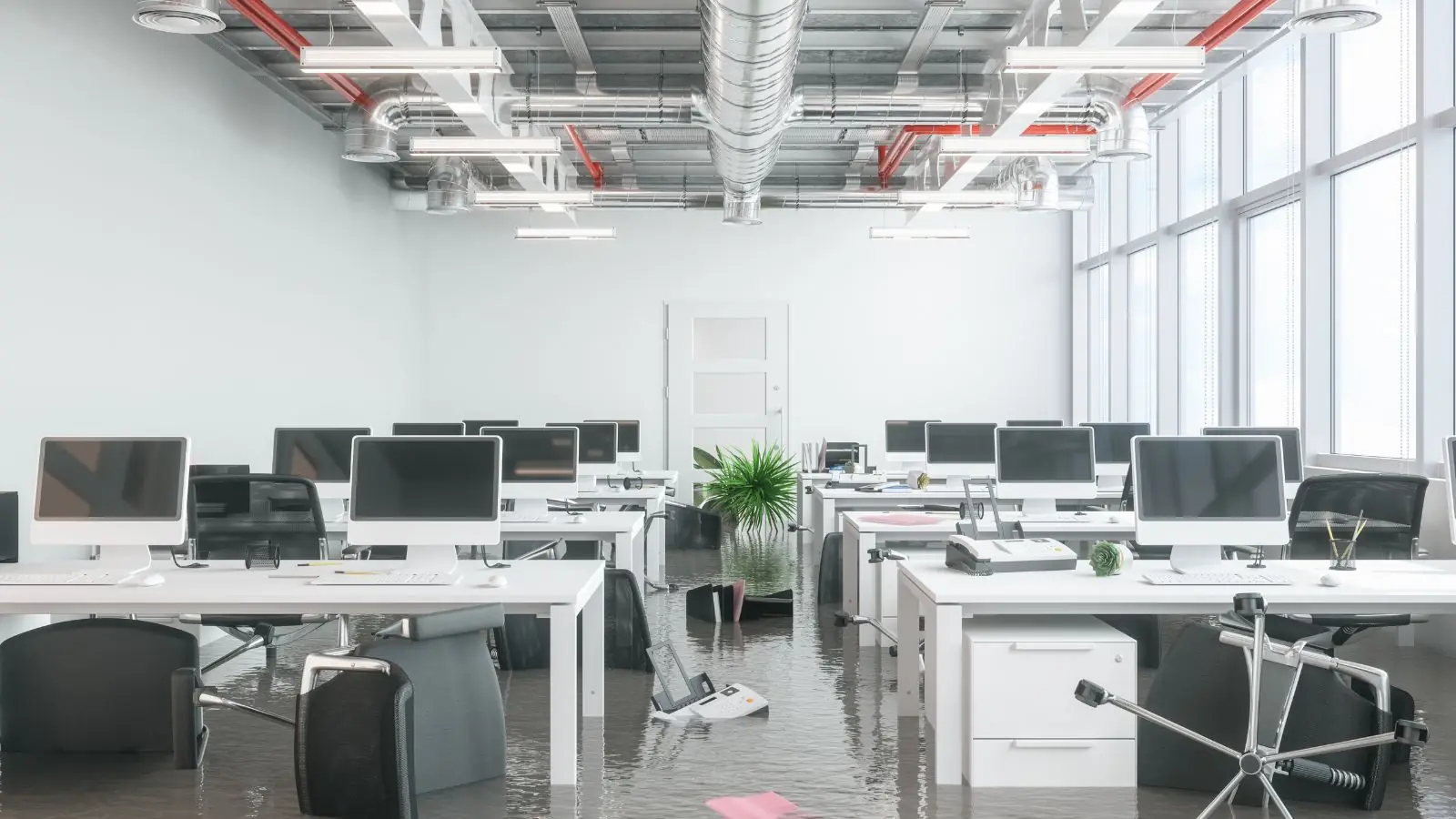
Commercial water damage restoration in West Hollywood, CA is the removal of water, the drying of walls, ceilings and floors, and the cleanup of affected building materials in a commercial space. The 24/7 line takes the call, and a licensed and insured crew is sent when one is available. This page covers what the crew actually does and how a commercial loss is usually organized.
Our work is limited to the water side of the loss. We extract, dry and clean. We coordinate with the property manager and the plumber, who stops and repairs the source. We do not claim industry specialties, and we do not promise arrival times.
How commercial water damage happens in West Hollywood buildings
The city's 2023 Local Hazard Mitigation Plan describes a building stock of small 1920s houses and duplexes, with some seven and eight story apartment buildings from the 1920s and 1930s, and many structures that predate 1993. Older mixed-use buildings often carry aging supply lines, cast iron drains and stacked suites above ground-floor space.
That stacking is the core problem. A failed supply line in an upper suite sends water down through the slab or ceiling into the suite below, then the corridor, then the lobby or parking level. One leak commonly becomes three or four affected spaces with three or four different occupants.
Water can also come from outside the walls. In 2026 a 36 inch LADWP water main broke at Sunset Blvd and Holloway Dr, and local news reports said garages and subterranean parking nearby flooded. The cause is under investigation. Below-grade parking levels collect water because everything drains toward them.
What you see and what it usually means
- A stained or sagging ceiling tile usually means water is above it, often from a suite on the next floor.
- A damp baseboard or a bubbling wall finish often means water is inside the wall cavity.
- A musty smell in a corridor or storage room points to wet carpet, pad or insulation that stayed damp.
- Water at the base of an elevator lobby or stairwell often traveled down a shaft or chase from above.
- A wet parking level floor after a rain or a main break means water entered from the street, a ramp or a drain.
First hour safety steps
Stop the source if you can do so safely. Close the fixture valve or the suite shut-off, and tell the property manager at once, since the building main may need to be closed by someone with access. Move people away from wet areas and keep them out of standing water near outlets, panels, elevators and equipment.
- Shut off the water at the nearest valve, or ask the property manager to close the building valve.
- Leave power on only where the floor is dry. If water reached outlets, a panel or an elevator machine room, stay clear and call 911 or the utility.
- Photograph the source, the water line and the affected finishes before anything is moved.
- Lift small items off wet floors and cover valuable records if it is safe to do so.
- Call the 24/7 line and describe the floor, the suite and how far the water has spread.
Our process and the equipment used
A crew starts by confirming the water source is stopped and sorting the water by category, using the ANSI/IICRC S500 standard as our reference for categories and drying classes. Clean supply water is treated differently from gray or contaminated water, and contaminated materials are removed instead of dried.
Extraction comes next. Submersible pumps clear deep water, and truck-mounted or portable extraction units pull water from carpet, pad and hard floors. In a mid-rise building, portable units are often carried up stairs because large hoses are hard to run through lobbies and elevators.
Drying follows. Moisture meters and thermal cameras map where water traveled, and air movers and dehumidifiers are placed to dry ceilings, walls and slabs. Readings are logged on each visit, and the readings, not the calendar, decide when the area is dry. See structural drying and dehumidification for how this works.
| Problem | Usual first move | What follows |
|---|---|---|
| Ceiling leak from an upper suite | Stop the source and protect the space below | Open the ceiling where needed and dry the cavity |
| Water across a ground-floor suite | Extraction with portable or truck-mounted units | Moisture mapping and floor drying |
| Wet carpet in a corridor | Extraction and assessment of the pad | Pad removal if needed, then air movers |
| Water in a parking level | Submersible pump with power safety first | Dehumidification and cleanup of residue |
| Gray or dirty water | Protective gear and containment | Flood damage restoration steps |
Every job starts with safety and the water category.
What affects the cost of commercial restoration
- The water category and whether any of it is contaminated.
- How many suites, corridors and floors the water reached.
- The materials involved, such as carpet, ceiling tile, drywall and flooring.
- Access, including stairs, elevators, loading areas and building rules for work hours.
- How long drying takes, which depends on the readings and the equipment needed.
- Whether rebuild work is needed after drying.
Scope and price are explained before work starts. A number is not given sight unseen, because hidden water changes the scope once walls and ceilings are opened.
Tenants, landlords and the permit office
Who pays and who manages the work depends on the lease and the source of the water. In general terms, a tenant should read the lease and tell the property manager right away, and the property manager coordinates with the owner and the plumber. We work with whoever has authority to approve the scope.
The City of West Hollywood Building and Safety FAQ says repairing leaks in water piping is exempt from a plumbing permit, while replacing piping needs a permit and inspection. The general building rule covers work on any building or portion of one. The FAQ does not state rules for tenant improvements, so ask Building and Safety before rebuild work.
Insurance note
Commercial insurance policies differ widely, and the wording on sudden water damage, gradual leaks and flood varies. Read your policy and call your insurer before you discard materials. Keep the failed part, take photos and keep a log of calls and receipts.
Water in a commercial space right now?
Call the 24/7 line. We explain the shut-off steps while a crew is dispatched.
Mistakes to avoid after a commercial leak
- Waiting to tell the property manager, which lets water reach more suites.
- Running building equipment in standing water, including vacuums and extension cords.
- Throwing away wet materials before photographing them.
- Closing up a wet ceiling or wall because the surface looks dry.
- Assuming the leak is fixed because the dripping stopped.
Stacked suites and below-grade levels
West Hollywood is a small city of about 35,757 residents at the 2020 Census, with commercial space often sitting below or between apartments. That makes ceiling leaks and shared walls the usual commercial scenario, and it makes a quick call to the property manager as important as the call to us.
Most of the city is served by LADWP, while Beverly Hills Water serves certain west side areas, according to the city. Ask the property manager which utility serves the building, since the shut-off for the building lives with that utility connection.
Sources: City of West Hollywood Local Hazard Mitigation Plan (2023), U.S. Census 2020 and City of West Hollywood water page.
Commercial water damage questions from West Hollywood
Is emergency commercial water damage restoration available in West Hollywood?
Yes. The 24/7 line takes calls overnight, on weekends and on holidays, and a crew is dispatched when one is available. No arrival time is promised, and you are told what to do while you wait.
Who should I call first, the property manager or you?
Call the property manager and us together if you can. The manager can close the building valve and approve access, and we explain the first steps and start the scope.
Do you repair the pipe that leaked?
No. A plumber repairs the pipe. We handle the water side: extraction, drying, cleanup and the list of affected materials.
How long does drying take?
It depends on the materials, the water category and the equipment, so several days is common. Moisture readings on each visit decide when the job ends.
Do you serve Beverly Hills commercial spaces too?
Yes. The Beverly Hills page lists the ZIP codes served, and the service area overview shows both cities.