
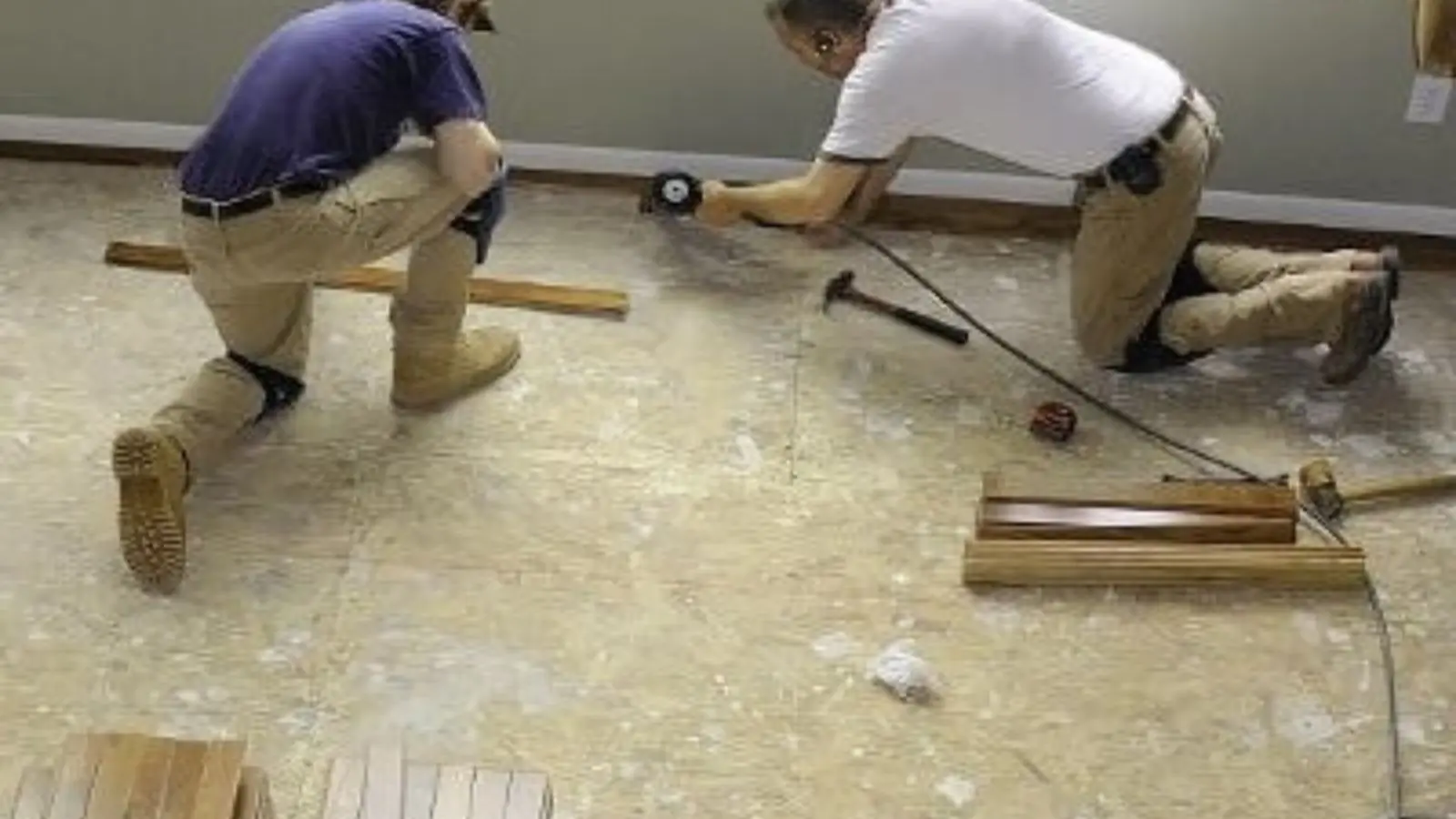
Water damage repair in West Hollywood, CA is the rebuild that starts after the leak is stopped and the structure is dry. It covers cutting out wet drywall and insulation, replacing flooring and trim that cannot be saved, then priming, texturing and painting so the room looks undisturbed. Repair is a different job from drying, and rushing it is how a brown ceiling stain returns a month later.
If walls or floors are still wet, start with water mitigation so the rebuild sits on dry framing. If you are unsure which stage you are in, call the 24/7 line, describe what you see and ask which step comes next.
When repair should start and when it should wait
Repair begins when moisture readings in the affected materials match unaffected parts of the building. Painting or patching over damp drywall seals moisture inside the wall, and the stain, bubbling or musty smell usually comes back. A moisture meter and a thermal camera show whether the cavity is truly dry, so the decision rests on readings and not on how the surface looks.
In the first day or two the better move is extraction and drying, which is covered under emergency water removal and mitigation. Repair crews plan around that work so nothing is closed up early. If a damp area has been left for days, ask about mold remediation before any new board goes up.
Signs the damage needs repair, not just a coat of paint
Brown rings and defined stains
A ceiling stain with a darker outer ring means water has reached the drywall face more than once. Stains this defined usually need the board cut out and replaced.
Bubbling or peeling paint
Paint lifts when moisture pushes through from behind. The paper face of the drywall under it is often soft.
Soft, crumbling or sagging board
Drywall that gives under a thumb has lost its strength. A sagging ceiling should be treated as urgent and kept clear of people.
Cupped or swollen flooring
Hardwood edges rise, laminate seams swell and baseboards pull away when the subfloor stays wet.
Ceiling and wall water damage repair
Ceilings and walls are where most repair calls start. The crew finds the wet area with a meter, marks cut lines past the visible damage and removes saturated drywall and wet insulation behind it. Framing is checked and dried before anything new goes in.
New board is hung, taped and skim-coated, then textured to match the surrounding surface as closely as possible. A stain-blocking primer goes on before the finish coat, and painting the whole wall or ceiling plane hides patch edges far better than a spot repair.
Some of the hardest cases are the ones callers describe plainly: a ceiling that came down under an upstairs leak, or a kitchen wall with a hole forming where water got in behind the siding. In those cases the plumbing or exterior source has to be fixed first, otherwise the rebuilt wall gets wet again.
Textures and paint are matched by eye and sample, so a perfect match to decades-old paint is never promised.
Hardwood floor cupping and floor repair
Cupped hardwood is a common floor question after a washer valve, dishwasher or condensate line leak. Boards take on moisture from below and the edges rise above the centers. Sanding early is a mistake, because boards can flatten again as moisture evens out.
Crews dry the floor, take readings over several days and then decide between refinishing and replacement. Solid walnut, oak and maple behave differently from engineered flooring, and glued-down floors can be harder to dry than nailed ones, so the plan is made board by board.
How the repair scope and price are set
A repair scope is written room by room: what comes out, what goes back in, what gets painted and what level of finish is expected. Because water damage hides inside walls, the scope is confirmed after the area is opened and dried, and any change is explained before it is done. The same visit records photos and moisture readings, which also helps with a property manager or an insurer.
| Material | Usually repaired when | Usually replaced when |
|---|---|---|
| Drywall | Wet briefly, dried fast, still firm | Soft, crumbling, stained through or contaminated |
| Plaster | Small cracks and local stains, still tight to the lath | Loose from the lath or wet over a large area |
| Insulation | Clean water and a type that can dry in place | Wet from gray or contaminated water, or compacted |
| Hardwood flooring | Mild cupping and boards dry flat | Buckled, black-stained or delaminating boards |
| Carpet and pad | Clean water caught quickly | Soaked pad, gray or contaminated water, or old carpet |
| Baseboards and trim | Solid painted wood that dries without swelling | Swollen MDF or trim that has split |
| Cabinets | Solid wood boxes that dry out | Particleboard that has swollen at the toe kick |
This guide is general. Moisture readings and a look inside the wall decide each case.
What affects the price of water damage repair
- The water category. Clean supply-line water is simpler than gray or contaminated water.
- Affected square footage and how many rooms the water reached.
- The materials involved, since plaster, hardwood and custom cabinets take more work than basic drywall and carpet.
- Drying days and equipment, which set how long the structure stays open.
- Rebuild scope: paint only, drywall and paint, or flooring, trim and cabinetry.
Insurance note
Sudden and accidental water damage is often covered by homeowners and renters policies, while gradual leaks and neglect often are not, and flood damage is usually excluded and needs separate flood coverage. Check your policy and ask your insurer before repairs begin. Photos and moisture readings taken at the start make the file easier to assemble.
Want your real number?
Describe the damage and we explain the scope and price before any work starts.
Rebuilding in West Hollywood's older buildings
The city's 2023 hazard mitigation plan describes most single-family homes and duplexes in West Hollywood as small and dating from the 1920s, with some seven and eight story apartment buildings from the 1920s and 1930s. For repair work that matters because homes of that era were commonly built with plaster over wood lath, which is patched differently from drywall and needs more care when a wet section is cut out.
For permits, the city's Building and Safety division is on the second floor of City Hall at 8300 Santa Monica Boulevard. Its FAQ exempts repairing leaks in water piping, valves or fixtures, but replacing drain, soil, waste or vent piping needs a permit and an inspection. Opening a wall can turn a patch into a piping replacement, so ask the division which rules apply before the wall is closed.
Sources: City of West Hollywood Local Hazard Mitigation Plan (2023) and the City of West Hollywood Building and Safety FAQ.
Water damage repair questions from West Hollywood
Who does the repair after the water is dried?
The same 24/7 line coordinates drying and rebuild, so one call starts the process. The scope is written after the area is opened and dried, and any change to it is explained before work continues.
How is the price for water damage repair set?
The scope lists what is removed, replaced and finished in each room, and the price follows from the factors above. A number is not given sight unseen, because hidden damage changes it. Scope and price are explained before work starts.
Can the repair match my existing paint and texture?
Texture and paint are matched by eye and by sample, and painting the full wall or ceiling plane gives the cleanest result. Matching decades-old paint exactly cannot be promised.
Does water damage repair in West Hollywood need a permit?
It depends on the scope. The city's Building and Safety FAQ exempts repairing leaks in water piping, valves or fixtures, but replacing drain, soil, waste or vent piping needs a permit and an inspection. Ask City of West Hollywood Building and Safety about your specific job.
Will my insurance pay for the repair?
Coverage depends on your policy and on whether the loss was sudden and accidental. Read the policy, ask your insurer before repairs begin and keep photos and receipts.
Do you also repair water damage in Beverly Hills?
Yes. Beverly Hills is part of the same dispatch area, and the Beverly Hills page lists its ZIP codes and local details.