
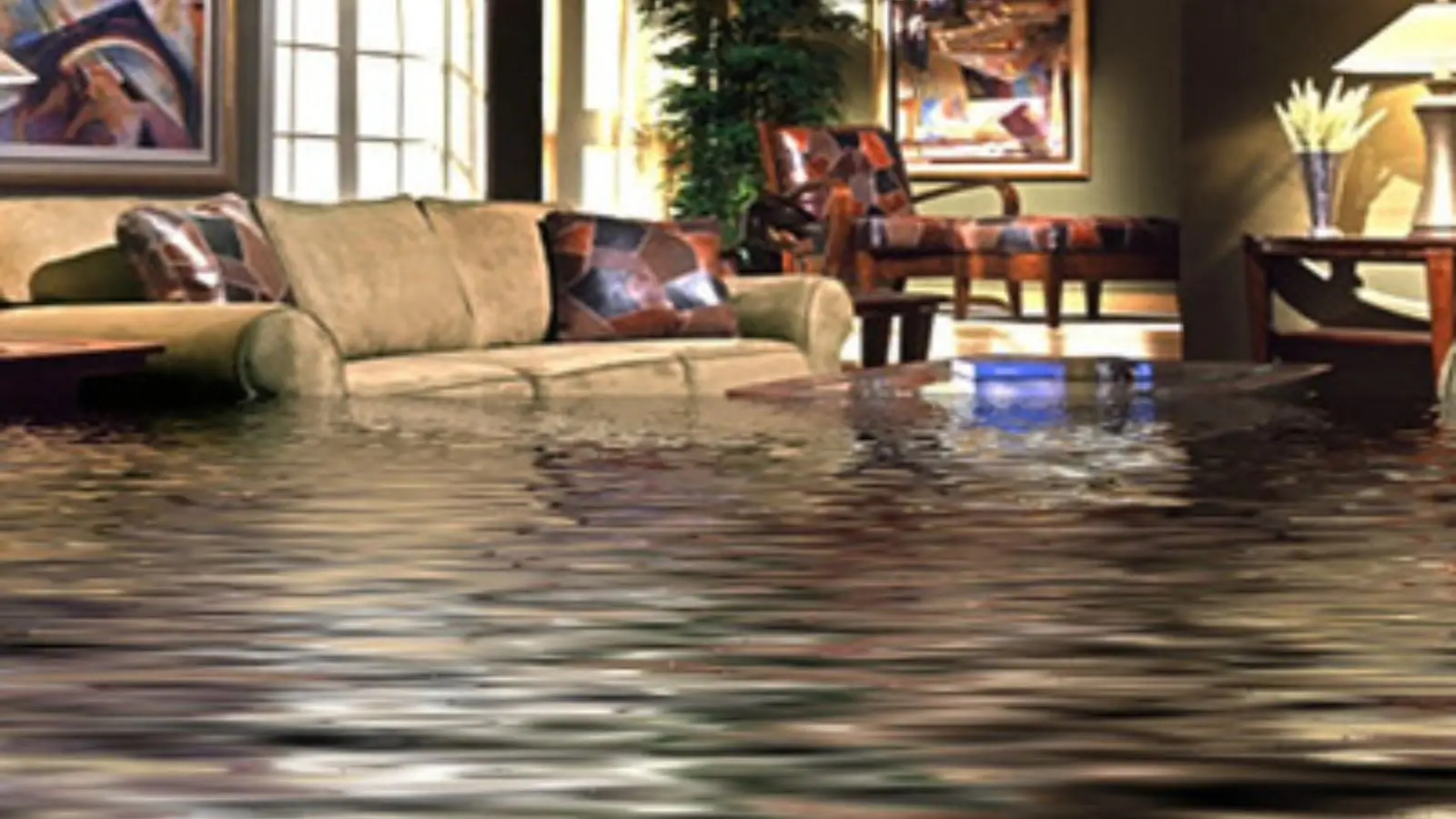
Water damage on floors in West Hollywood, CA is moisture that has soaked flooring, underlayment or the subfloor below it, causing cupping, swelling, staining or odors. Hardwood, laminate, carpet, tile and vinyl each react differently, which changes whether drying or replacement is the better path.
Common causes in homes here are indoor ones, such as a washer valve that failed, a dishwasher leak or an air conditioning condensate line that backed up. This guide explains what each floor type does, why patience helps with hardwood, and how drying is done.
Act first on the water, then on the floor
Stop the source and remove standing water quickly, since flooring soaks up moisture from underneath as well as from above. A single washer valve break that runs unnoticed for about an hour can wet a kitchen, hallway and the room next door. Lift rugs and furniture legs off the floor so air can reach the surface.
If water is still spreading or pooled, see emergency water removal for how extraction works. Active water on the floor near outlets or appliances is a hazard, so keep power off at the breaker only if you can reach the panel dry.
How each type of flooring reacts
| Flooring | What water does | Salvage outlook |
|---|---|---|
| Solid hardwood | Edges rise (cupping) or centers rise (crowning), gaps and staining appear | Good if dried slowly and quickly. Early sanding is a mistake |
| Engineered hardwood | Layers can separate and edges curl | Mixed. Thin top layers may not allow resanding |
| Laminate | Core board swells at seams and does not recover | Poor once swollen, so panels are usually replaced |
| Carpet over pad | Pad holds water and can feed odors | Carpet can sometimes be dried, pad is usually replaced |
| Tile and grout | Tile itself resists water but grout and the substrate can stay wet | Often fine, with drying of the substrate |
| Vinyl plank or sheet | Water gets trapped under the surface and can lift seams | Case by case. Moisture under vinyl is often missed |
| Plywood subfloor | Edges swell and layers may separate | Often saved if dried, replaced if delaminated |
Salvage depends on how long the floor was wet and what kind of water it was.
Why hardwood cupping needs patience
Boards cup when the underside is wetter than the top. Many people want to sand right away, but cupping can ease as moisture evens out through the board. Sanding too early removes wood from a board that would have flattened by itself, and the floor ends up thin or dished.
Crews usually check the floor with a moisture meter over days, not hours. Once readings are back to normal and the boards stop moving, any remaining cupping is judged. Walnut and other dense hardwoods move slowly, which is why many people only notice the problem once the boards have already lifted.
Floor wet or cupping?
Call the 24/7 line. Early drying gives hardwood the best chance.
How floors are dried
Extract
Standing water is pulled out so the surface starts drying right away.
Open and vent
Baseboards may come off and small holes in hardwood or subfloor edges allow airflow below.
Dry with equipment
Air movers, dehumidifiers and sometimes floor drying mats pull moisture out of boards and the subfloor.
Verify
Moisture meter readings are compared with dry flooring nearby before anything is sanded, sealed or replaced.
This is the same process described under water mitigation. Floors dry in layers, so the surface can feel fine while the subfloor stays wet, which is why readings matter more than touch.
Moisture under vinyl, tile and engineered boards
Hard surfaces hide trouble. Water slips under vinyl planks through seams and sits against the subfloor, where it feeds odors and loosens adhesive. Tile may look perfect while the mortar bed underneath stays wet.
Technicians use a moisture meter and thermal camera to find these pockets, then lift a few pieces or drill small vents so air can reach the trapped water. Skipping that step is why some floors smell musty weeks after a leak appeared to be dry.
Repair or replace: how the decision is made
Flooring is replaced when it has delaminated, when the core has swollen, or when water was contaminated. Carpet pad is nearly always replaced. Hardwood that dries and flattens can be sanded and refinished. Scope and price are explained before work begins, as part of water damage repair.
Those same repair steps apply a short way west, as covered on the page for water damage restoration in Beverly Hills. If you plan to file a claim, photograph the floor before anything is removed, and ask your insurer what it needs to see.
Dry months point to an indoor source
NOAA's 1991 to 2020 climate normals for the Westwood (UCLA) station list July rainfall at 0.03 inches and August at 0.01 inches, against 4.73 inches in February. So when a floor is wet in the middle of summer, the cause is almost never weather. Look at the washer hose and valve, the dishwasher supply line, an air conditioning condensate line, or a sink supply before suspecting anything else.
The City of West Hollywood's Building and Safety permit FAQ exempts the repair of leaks in water piping, valves or fixtures. That means swapping a failed washer valve or supply line generally does not need a permit, which helps you stop the water source fast before drying begins.
Sources: NOAA National Centers for Environmental Information 1991 to 2020 normals, Westwood (UCLA) station, as reported by the National Weather Service Los Angeles/Oxnard office and UCLA. City of West Hollywood Building and Safety frequently asked questions.
Common questions from West Hollywood readers
Should I sand cupped hardwood right away?
No. Cupping can ease as moisture equalizes through the boards. Wait for moisture readings to return to normal and the boards to stop moving, then judge whether sanding is needed.
Can laminate flooring be saved after a leak?
Rarely. The fiberboard core swells at the seams and does not return to shape, so wet panels are usually replaced.
Is carpet always thrown away after water damage?
Not always. Carpet from clean water can sometimes be dried, but the pad underneath usually holds moisture and is replaced.
What if water got under tile or vinyl?
Moisture can sit in the substrate even when the surface looks fine. A meter or thermal camera can find it, and drying through vents or removed pieces may be needed.
Why does summer floor damage in West Hollywood usually mean a plumbing or appliance leak?
NOAA normals for the nearby Westwood (UCLA) station show almost no rain in July and August, so a wet floor then usually comes from a washer, dishwasher, condensate line or supply line.