
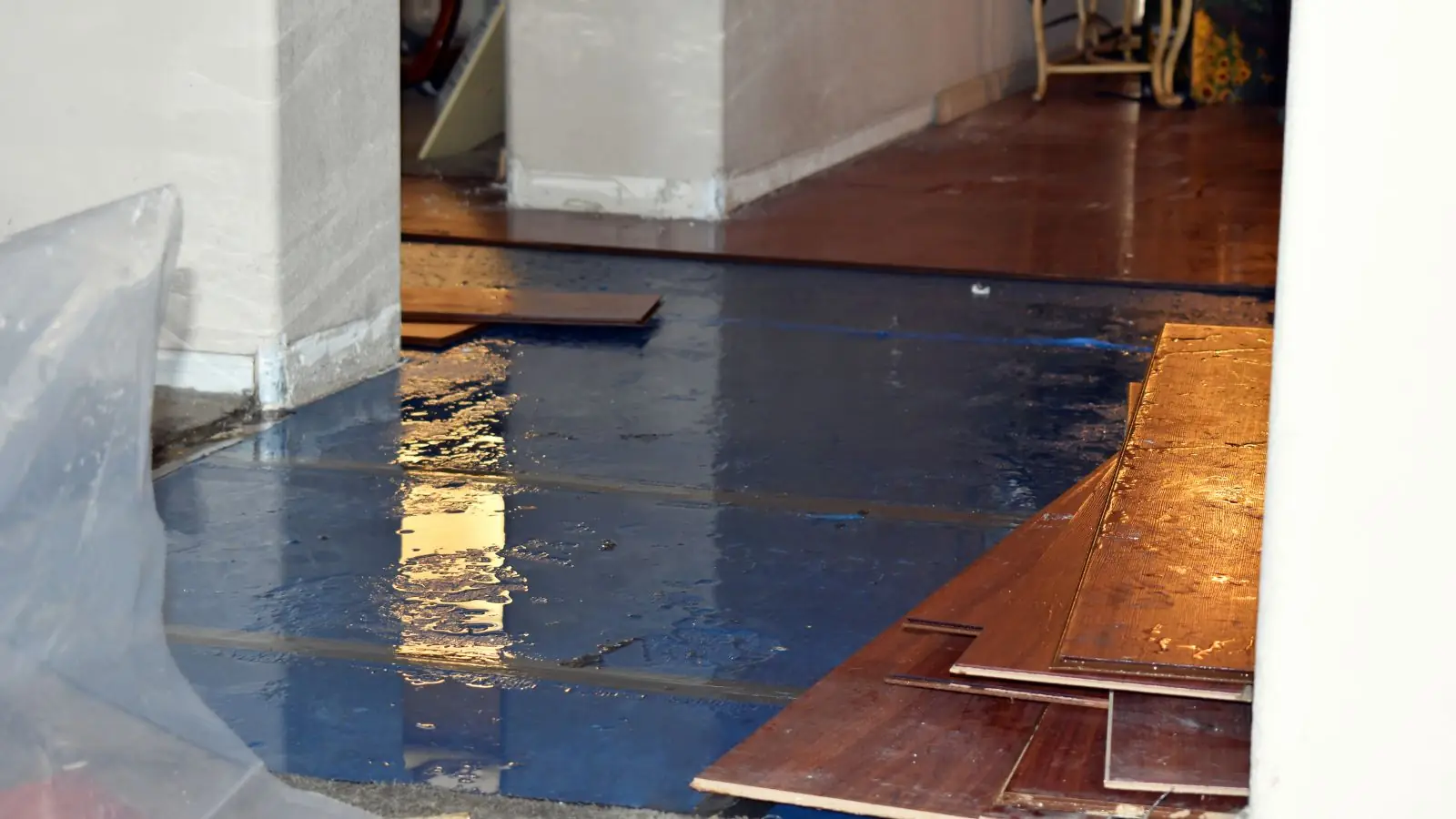
To fix water damage on wood in West Hollywood, CA, you dry the piece fully, judge how much strength it lost, and then refinish it or replace it. Water damaged wood is lumber, trim, cabinetry or furniture that has swelled, stained or softened after contact with a leak, a flood or long-running humidity.
This guide covers wood in the walls and rooms of a home, such as baseboards, door jambs, cabinets, framing and subfloor. Floors have their own rules, so they get a separate post. Speed matters, because wood that stays wet loses both strength and finish.
Can the wood be saved? Start with how long it stayed wet
Solid wood is more forgiving than most people expect. A baseboard that sat in a puddle for an afternoon can usually be dried and kept. Wood that stayed damp for days, or that sat in contaminated water, is a much harder call.
Three questions settle most decisions. How long was the wood wet, what kind of water was it, and is the wood still firm when you press a screwdriver tip into it? Firm, sound wood that dries back to its normal moisture reading is a candidate for saving.
Swelling, staining and rot: what each one means
Swelling
Wood fibers absorb water and expand. Swelling often eases as the wood dries, though joints, drawer fronts and door edges may stay distorted.
Staining
Dark or gray marks come from tannins, old finishes or mineral content in the water. Stains are usually cosmetic and are handled during refinishing.
Soft or crumbling areas
Wood that dents under a fingernail or breaks apart has started to decay. Soft sections are cut out and replaced, since drying cannot restore them.
Mold on the surface
Surface growth on trim or cabinet backs means moisture lasted. The wood is dried and cleaned, and heavier growth moves into mold remediation.
Salvage guide by type of wood
| Wood or situation | Usually salvageable? | Typical approach |
|---|---|---|
| Solid wood baseboards and casing | Often yes if dried quickly | Remove, dry on edge, sand and refinish, or replace if warped |
| Door jambs and frames | Often yes | Dry in place, check for swelling that stops the door, then refinish |
| Solid wood cabinets | Often yes for frames, case by case for doors | Remove toe kicks, dry the cabinet base, rehang doors once straight |
| Particleboard and MDF cabinets | Rarely | Swollen board does not return to shape, so panels are replaced |
| Furniture with veneer | Mixed | Dry slowly, then reglue or refinish, since veneer lifts as glue softens |
| Wall framing studs | Usually yes | Dry the cavity until readings match dry framing, then close the wall |
| Plywood subfloor | Often yes, edges may swell | Dry from above and below, replace delaminated sheets |
| Any wood with soft, crumbling areas | No | Cut out and replace the affected section |
This is a general guide. A moisture meter reading and a hands-on check decide each case.
Wood still wet?
Call the 24/7 line. Fast drying often decides whether wood is saved or replaced.
How wet wood is dried without ruining it
Fast, hot drying cracks and cups wood. Crews aim for steady, controlled drying with air movers aimed along the surface and dehumidifiers that pull moisture out of the room. Moisture meters track progress, and drying continues until the reading matches dry wood of the same type nearby.
Wood in a wall cavity is handled the same way, which is why this overlaps with water mitigation. The wall may be opened at the bottom so air can reach the studs and the back of the baseboard. Closing everything up too early traps moisture beside the wood you wanted to save.
Refinishing, repairing or replacing
Once dry, saved wood is sanded to remove raised grain and stains, then sealed and finished to match. Small swollen spots in trim can be filled. Deep warps are usually cheaper to replace than to straighten, since new trim is simple to cut and paint.
Cabinets are the trickiest case. Solid wood frames can often stay, while swollen particleboard shelves and bases are replaced. The sequence and scope are written out before work begins under water damage repair, so you know what is being saved and what is not.
Furniture and small pieces
Solid wood furniture can often be dried slowly indoors, away from direct heat and sunlight. Pull out drawers, remove cushions and prop the piece so air circulates underneath. Fast drying near a heater cracks joints and lifts veneer.
Veneered pieces, chipboard bookcases and anything with glued joints are riskier. If a piece has sentimental or high value, ask a furniture restorer before attempting repairs yourself.
Document the damage before anything is removed
Photograph and record video of every affected piece before it is pulled out or discarded. Keep a list of what was damaged and any receipts. Standard policies often cover sudden and accidental leaks, so check your policy and ask your insurer what they need to see.
Hiring a repair contractor in Los Angeles County
The California Contractors State License Board says contractors on a job totaling $1,000 or more in labor and materials must be licensed by CSLB. Before you sign, check the contractor's license at cslb.ca.gov, since a license number should appear on the written contract.
CSLB advises paying no more than 10 percent down or $1,000, whichever is less, and getting a written contract before work starts. The Los Angeles County Department of Consumer and Business Affairs guide adds two practical steps for damaged homes: photograph and video all damage, and ask whether your insurer needs to inspect before repairs begin. In practice, that means holding off on pulling out trim or cabinets until the insurer says it has seen them.
These rules apply on both sides of the city line, so they matter just as much to a homeowner who calls about water damage in Beverly Hills.
Sources: California Contractors State License Board consumer guidance. Los Angeles County Department of Consumer and Business Affairs guide to hiring remediation and restoration contractors (2025).
Common questions from West Hollywood readers
Can water damaged wood be dried and used again?
Often yes, if it was wet for a short time, stayed firm and dries back to a normal moisture reading. Soft, crumbling or delaminated wood is replaced instead.
Why did my wood trim swell?
Wood fibers absorb water and expand. As the trim dries, much of the swelling eases, though a badly warped piece may need replacing.
Can I refinish wood before it is completely dry?
No. Finishes sealed over damp wood can peel or trap moisture. Wait until a moisture meter shows the wood matches dry wood nearby, then sand and refinish.
What if my cabinets are particleboard?
Particleboard swells and rarely returns to shape, so wet panels and bases are usually replaced. Solid wood frames and doors have a better chance of staying.
What should I check before hiring a contractor for water damage repair in West Hollywood?
Look up the license at cslb.ca.gov, get a written contract with scope and price, and keep any down payment to 10 percent or $1,000, whichever is less. Ask your insurer whether it needs to inspect first.