
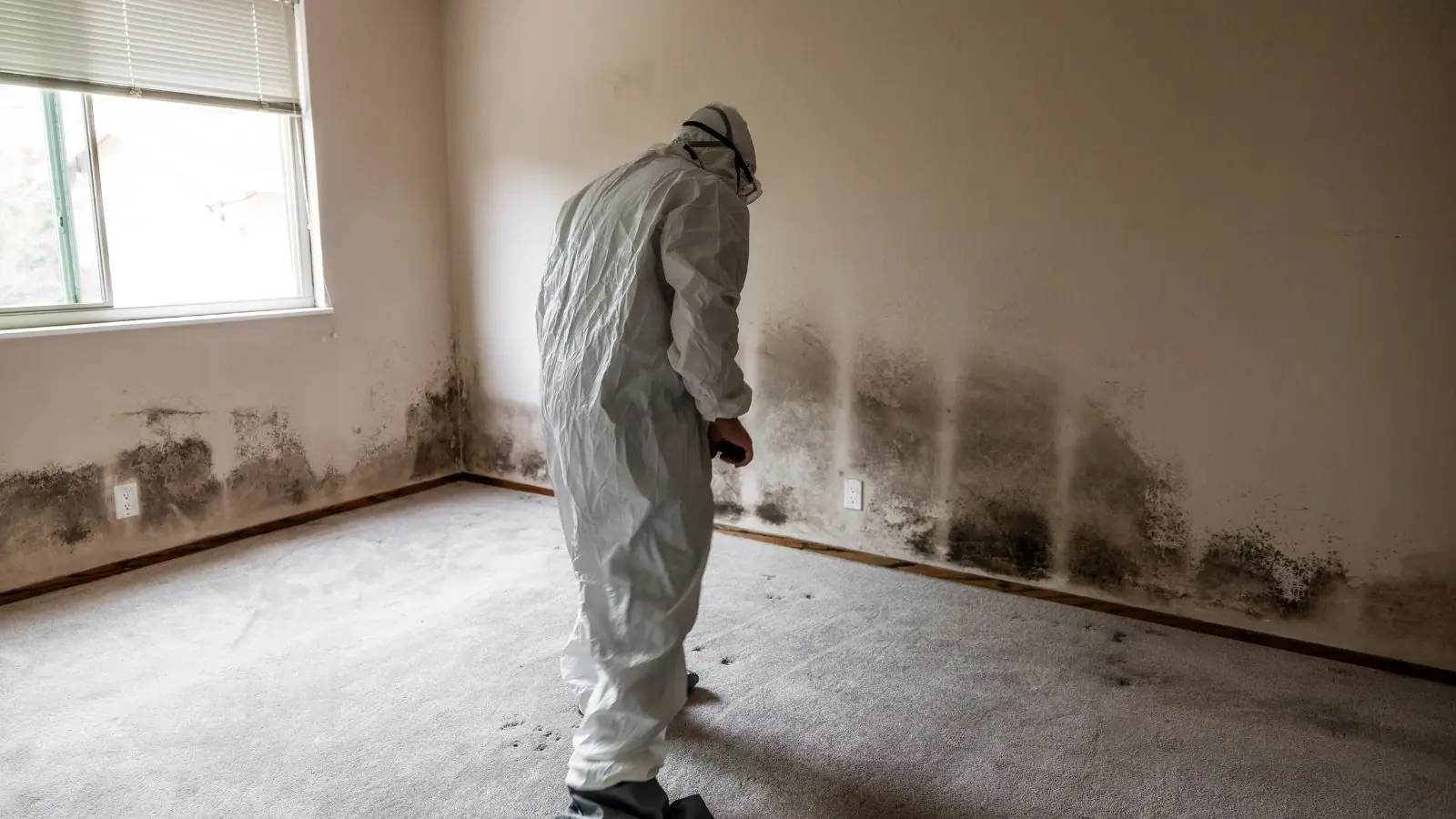
Basement mold removal means finding the moisture that fed the growth, sealing off the area, and taking out or cleaning whatever mold has damaged. In West Hollywood, CA, that work often happens in places that are not basements at all.
The distinction matters when you search for help, because a parking level, a storage room under an apartment building and a crawl space each dry out differently. This guide explains what those spaces are, how removal works, and when a mold remediation crew is the right call.
Do West Hollywood buildings have basements?
Mostly not. The city's own hazard plan describes small single-family homes and duplexes that date from the 1920s, along with apartment buildings of several stories. In practice, the lowest level of those buildings is more often a garage, a storage area or a crawl space than a finished basement.
A few homes do have lower levels, so check your own building before assuming anything. The useful point is that mold needs moisture, not a basement. Any room below the sidewalk or street grade can stay damp, whether it is a laundry room, a parking level or a wall that touches soil on one side.
Where mold turns up below grade
Below-grade garages
Concrete and the lower edge of drywall can hold water after a pipe leaks overhead or after street water reaches the parking level. Cardboard boxes and wood shelving give mold something to grow on.
Storage rooms
Books, fabric and boxes absorb moisture slowly. A damp corner can go unnoticed for weeks behind stacked items.
Crawl spaces
Subfloor wood, insulation and ductwork sit close to the ground. A slow plumbing leak overhead drips onto insulation and stays there.
Lower-level rooms
Where a home does have a lower floor, carpet, baseboards and the bottom of the drywall wick moisture first.
Moisture sources and first moves
Every below-grade space has a most likely water source. Matching the source to a first move keeps a small problem from spreading while you wait for an inspection.
| Space | Likely moisture source | First move |
|---|---|---|
| Parking level | Plumbing leak above, street water after a flood event | Stop the source, lift stored items off the floor, call a crew |
| Storage room | Condensation, a leaking supply line, a damp slab | Check humidity, move boxes onto shelves, look behind stacked items |
| Crawl space | Slow supply or drain leak, blocked vents | Photograph first, shut off the water if it is safe, request an inspection |
| Lower-level room | Seepage after heavy rain, an appliance leak | Dry within 24 to 48 hours, remove wet carpet and pad |
Photographs taken before anything is moved help with an insurance claim and with any report to a landlord or association.
Found mold below grade?
Call the 24/7 line to talk through the space and what a crew would check first.
How removal works in a below-grade space
Find the water
A moisture meter and a thermal camera trace dampness back to its source. The leak or seepage has to stop before cleanup means anything.
Contain the area
Plastic barriers and a negative air machine keep spores from drifting into living areas or the garage above.
Remove and clean
Porous materials that mold has grown into, such as carpet and insulation, are bagged and discarded. Hard surfaces are HEPA vacuumed and cleaned.
Dry and verify
Dehumidifiers and air movers dry the space until moisture readings return to normal, and the area is checked before any rebuild begins.
What can be saved and what cannot
The EPA notes that absorbent or porous materials, such as ceiling tiles and carpet, may have to be thrown away if they become moldy. Concrete, metal and sealed wood are far easier to clean than drywall or insulation.
Stored belongings follow the same logic. Plastic bins and metal items can usually be wiped and dried, while cardboard, paper and upholstered pieces that sat in damp air are often better replaced. Set aside anything sentimental and ask the crew what cleaning options exist before it goes in the trash.
Rain, humidity and the dry months
NOAA 1991 to 2020 normals for the Westwood (UCLA) station show 17.73 inches of rain in a July to June season. February averages 4.73 inches, January 4.14 and December 2.93, while July averages 0.03 and August 0.01. The wet months are when seepage and roof or wall leaks tend to show up, and the dry summer is the window for drying out and rebuilding.
The EPA advises drying water-damaged areas within 24 to 48 hours to prevent mold growth, and keeping indoor humidity below 60 percent, ideally between 30 and 50 percent. A low-cost humidity meter in a storage room or garage level tells you whether the space stays in that range after the winter rains.
Sources: NOAA National Centers for Environmental Information 1991 to 2020 normals as published for the Westwood (UCLA) station with the National Weather Service, and the U.S. EPA guide A Brief Guide to Mold, Moisture, and Your Home
Keeping the space dry afterward
Lower humidity is the lasting fix. Run a dehumidifier in enclosed storage rooms, keep stored items off the floor and away from exterior walls, and leave a few inches of air around shelving so moisture does not sit behind boxes.
Repair small leaks promptly, because a dripping valve or a sweating pipe overhead will keep feeding the same corner. If water is still present, water mitigation drying comes before any mold work. Owners in neighboring Beverly Hills face the same questions, and the Beverly Hills water damage page covers that side of the city line.
Common questions from West Hollywood readers
Is a crawl space the same as a basement for mold purposes?
The moisture rules are the same, but access and containment differ. Crawl spaces are cramped, so crews often work in protective gear with smaller equipment, and the insulation and subfloor wood are the main materials to inspect.
Can I remove mold from a garage wall myself?
The EPA says an area of less than about 10 square feet, roughly 3 feet by 3 feet, can often be handled by the owner. Larger areas, or any growth tied to a lot of water, call for a professional assessment.
Does homeowners insurance pay for mold removal?
It depends on the policy and on whether the water source was sudden and accidental. Check your policy and ask your insurer before work begins, and keep photos and receipts either way.
How do I know the area is dry enough to rebuild?
Moisture readings decide it, not the calendar. A crew compares readings in the affected materials with a dry reference area and records them.
Do West Hollywood rain totals matter for basement mold?
Rain matters most from December through March, when the Westwood station averages 2.93 to 4.73 inches per month. A below-grade room that stays dry in summer can turn damp after a wet winter storm, so check it in early spring.